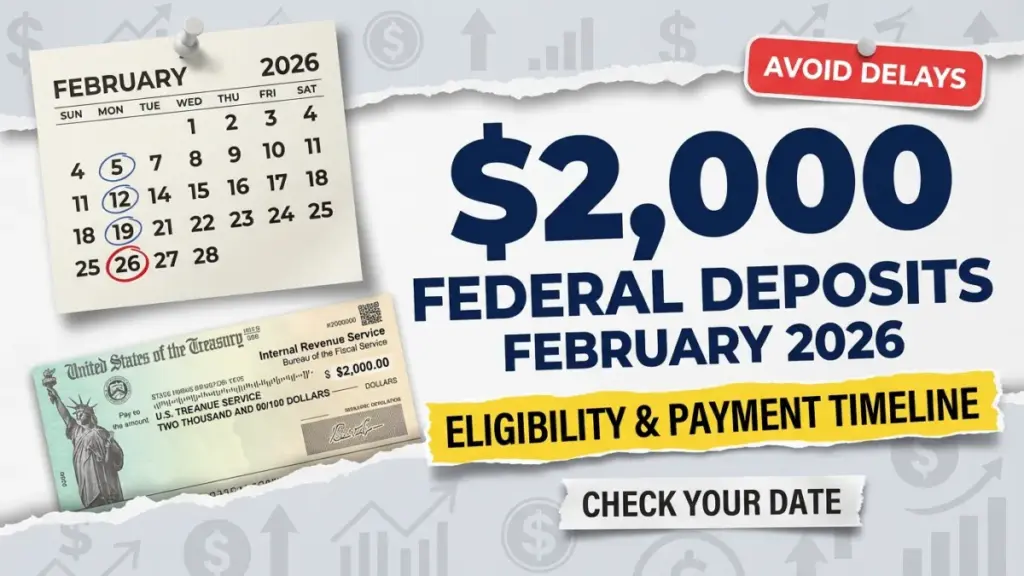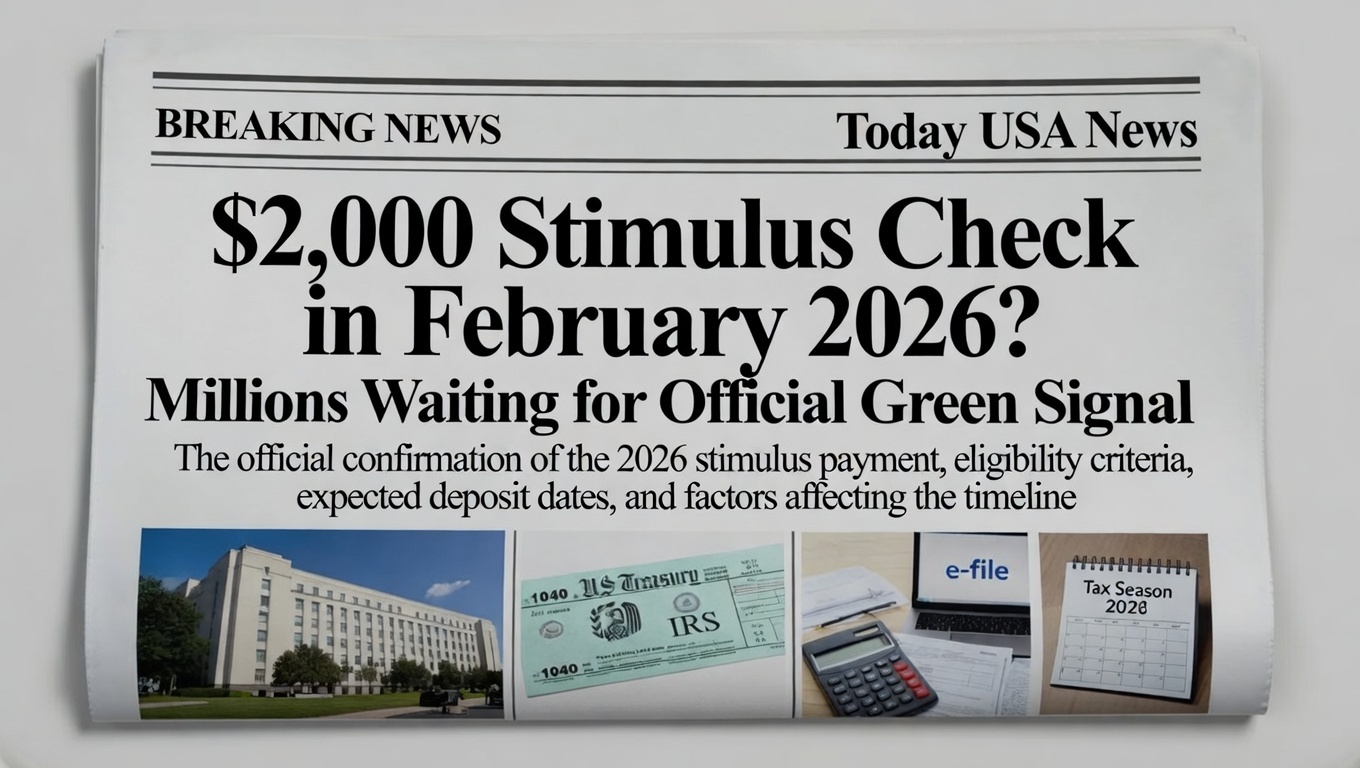
February 2026 IRS $2000 Deposit Update: Reports of a possible $2,000 direct deposit from the Internal Revenue Service in February 2026 have been generating significant attention among American taxpayers who are actively looking for financial relief during a period when household budgets are already feeling stretched by elevated living costs. Unlike the broad pandemic-era stimulus checks that reached nearly all qualifying adults, this payment is being described in available reports as a more targeted form of financial support rather than a universal distribution program open to everyone regardless of income. The beginning of the calendar year is traditionally one of the most financially demanding periods for households, with credit card balances from holiday spending, winter utility bills, property tax installments, insurance renewals, and school-related costs all arriving simultaneously while income remains unchanged. This seasonal financial pressure makes any discussion of additional government support particularly resonant among families who are managing multiple financial obligations at once and looking for any available help to maintain stability through the early months of the year.
How This Payment Differs From Earlier Stimulus Programs
One of the most important distinctions that taxpayers need to understand about the reported February 2026 payment is how fundamentally different its design appears to be compared to the broad stimulus checks distributed during the pandemic years of 2020 and 2021. Those earlier programs were intentionally designed to reach as many qualifying adults as possible, operating on relatively straightforward income thresholds that allowed a large portion of the American population to receive the same fixed payment amount. The current payment being discussed appears to take a considerably more selective approach, relying more heavily on recent tax filing history and specific income thresholds to determine who qualifies and for how much. This narrower design is intended to direct available federal resources toward the households considered most financially vulnerable rather than distributing funds broadly across all income levels, which means that higher-income taxpayers may receive reduced amounts or may not qualify at all based on the same phase-out rules that have been applied in previous targeted relief programs.
Who May Qualify and What Factors Determine Eligibility
Based on the framework typically used by the IRS for income-based relief programs, eligibility for any such payment would most likely be determined primarily by the adjusted gross income reported on the most recent federal tax return that a household has filed. Filing status plays an equally important role in these calculations, as the income thresholds at which payments begin to phase out differ depending on whether a taxpayer files as a single individual, as married filing jointly, or as head of household. Household composition and the number of qualifying dependents may also influence the final payment amount since previous federal relief programs have recognized that families supporting children and other dependents generally face higher living costs than single individuals. Taxpayers who have not filed recent returns or whose IRS records contain outdated information may experience delays in receiving any payment, which is why financial advisers consistently recommend reviewing and updating IRS account information proactively rather than waiting until a payment is announced.

How Payments Would Be Delivered and When to Expect Them
If this payment is officially authorized and distributed, the most likely delivery method would be direct deposit using the banking details that taxpayers already have linked to their IRS accounts, which has historically proven to be the fastest and most reliable method for distributing federal payments at scale. Taxpayers who have recently changed banks, closed old accounts, or updated their financial details should take time now to verify that the information on file with the IRS reflects their current and active banking details to avoid the kind of processing delays that have affected some recipients in previous payment rounds. Paper checks and prepaid debit cards have been used as backup delivery methods in past programs for taxpayers whose deposit information was unavailable or outdated, though these alternatives naturally take considerably longer to reach recipients. Based on how previous IRS payment distributions have operated, deposits would likely be processed in batches over multiple days or weeks rather than all being issued simultaneously, meaning that two households with nearly identical eligibility profiles could receive their funds on noticeably different dates depending on where they fall in the processing sequence.
Using Any One-Time Payment Wisely for Lasting Financial Impact
Financial advisers consistently recommend approaching any one-time government payment as a strategic tool for improving financial stability rather than treating it as discretionary spending money available for immediate consumption. A household carrying high-interest credit card debt for example could achieve meaningful long-term financial benefit by directing a portion of the payment toward reducing that balance, since eliminating even part of a debt accruing at a high annual interest rate generates savings that continue to compound positively over subsequent months. Building or reinforcing an emergency savings buffer is another use of one-time funds that financial planners frequently recommend since even a modest cushion can prevent a future unexpected expense from creating a new cycle of high-interest borrowing. The most appropriate use of any such payment depends entirely on a household’s specific financial obligations and circumstances, which is why personal financial planning rather than generalized advice produces the best outcomes for individual families.
Protecting Yourself From Misinformation and Verifying Your Status
With online speculation about this payment spreading rapidly across social media and financial discussion platforms, maintaining a disciplined approach to verification through official sources is one of the most important steps any taxpayer can take to protect both their financial planning and their personal information. The IRS online account portal, official tax transcripts, and formal written notices issued by the agency directly to taxpayers represent the most accurate and trustworthy sources of information about eligibility and payment status, and these should always be consulted before making any financial commitments based on anticipated funds. Fraudsters consistently exploit public excitement about potential government payments to launch phishing schemes that attempt to capture personal or banking information through fake websites and unsolicited communications claiming to represent official agencies. Planning conservatively by avoiding any spending commitments based on a deposit that has not yet actually arrived in your account is the single most protective financial habit any household can practice during periods of uncertainty about whether a payment will materialize and on what timeline.

Disclaimer: This article has been written purely for informational and general awareness purposes and does not constitute financial, tax, legal, or professional advice of any kind. The potential February 2026 IRS $2,000 direct deposit discussed in this article is based on publicly available reports and policy discussions and has not been officially confirmed or authorized at the time of writing. Payment eligibility, income thresholds, distribution timelines, and final amounts are subject to official IRS guidance and individual tax filing circumstances which may change without notice. Readers are strongly encouraged to consult the official IRS website at irs.gov or seek personalized guidance from a qualified tax professional before making any financial decisions based on anticipated payments. The author and publisher shall not be held responsible for any outcomes resulting from decisions made based on the content of this article.