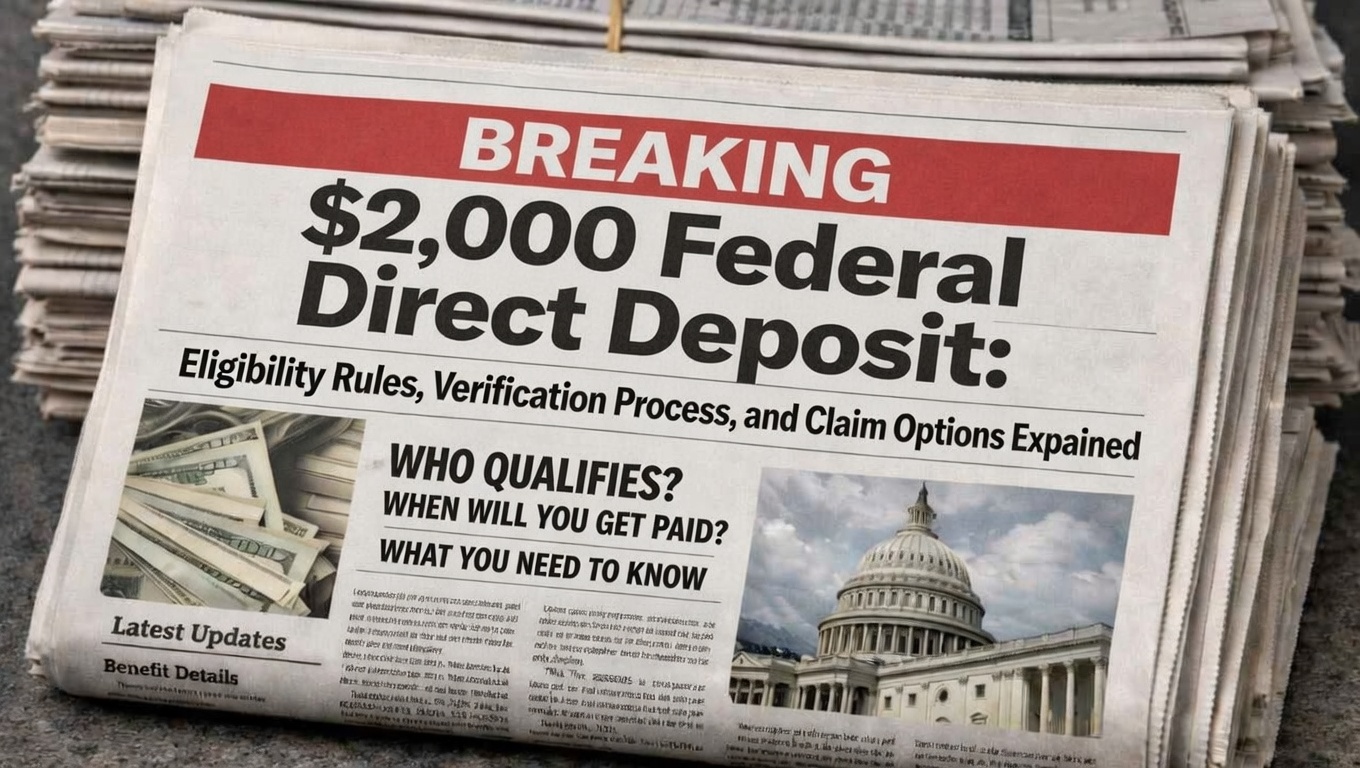
$2,000 Federal Direct Deposit: Few topics generate as much interest and discussion among American taxpayers as the possibility of receiving direct financial support from the federal government. The recent conversation surrounding a potential $2,000 federal direct deposit has spread quickly, with millions of households eager to understand whether they qualify, when they might receive the funds, and what steps they need to take to ensure nothing goes wrong with their payment. For families already navigating the pressures of rising grocery bills, higher housing costs, and increasing utility expenses, even a single one-time payment of this size can provide meaningful and timely financial relief. Federal agencies have periodically issued one-time payments tied to tax credits, economic relief programs, and special rebate initiatives, and understanding how these programs generally work can help taxpayers approach the situation with clarity and realistic expectations rather than confusion or misinformation.
What These Federal Payments Are and How They Work
Federal direct deposit payments of this nature are typically connected to specific government programs such as tax credit distributions, economic relief initiatives, or rebate programs designed to return money to qualifying households during periods of financial strain. These payments are generally processed automatically using information that the government already has on file, including data drawn from recently filed tax returns and existing federal benefit records. This automatic processing system means that most eligible recipients do not need to fill out new forms or submit fresh applications in order to receive their money, which significantly simplifies the experience for the average taxpayer. The government’s ability to cross-reference income data, filing status, and benefit records allows payments to be distributed at scale and with reasonable efficiency. Understanding the general framework of how these programs operate helps taxpayers know what to expect and reduces the likelihood of falling for misinformation or scams that often circulate whenever federal payment news becomes widely discussed.
How the Government Decides Who Qualifies
Eligibility for a federal direct deposit program is almost always tied to a set of specific financial and personal criteria that are established by the legislation or administrative policy governing that particular payment. Income plays the most significant role in determining qualification, with the adjusted gross income figure reported on a person’s most recent federal tax return serving as the primary benchmark against which eligibility is measured. The threshold that determines whether someone qualifies can vary depending on their filing status, with different income limits applying to individuals filing as single, those filing jointly as a married couple, and those filing as head of household. Residency and citizenship requirements are also commonly part of the eligibility framework, ensuring that payments reach the intended recipients within the United States. People who have filed a tax return in recent years or who already receive federal benefits such as Social Security are generally already in the system with their information on file, which streamlines the qualification and distribution process considerably.

How the Payment Actually Gets to You
Once a person has been determined to be eligible for a federal direct deposit payment, the mechanics of actually getting the money into their hands are relatively straightforward in most cases. The relevant federal agency will use the bank account information associated with the most recent tax filing or the benefit account already on record to initiate an electronic transfer of the funds. This electronic direct deposit method is the fastest and most reliable way for recipients to receive their money, and it eliminates the delays and risks associated with physical mail. However, if the banking information on file is outdated, incorrect, or missing entirely, the agency will typically resort to mailing a paper check to the address that appears on the most recent tax return or benefit record. Because the payment process is largely automatic for most eligible recipients, there is generally no need to take any action unless the official agency specifically instructs recipients to update their information or complete an additional step in the process.
The Easiest Ways to Check Your Payment Status
Once a payment has been announced and the distribution process has begun, one of the most common questions recipients have is how to confirm whether their money has arrived or is on its way. The quickest and most accessible method is simply to check your bank account directly, either by logging into your mobile banking application or by reviewing your most recent account statement for any incoming transactions from a federal agency. It is worth noting that the deposit may appear under the name of the relevant federal agency or department rather than under the specific name of the program itself, so an unfamiliar transaction label should not automatically cause alarm. Many federal agencies also maintain secure online portals where registered users can log in to check the status of their payment, view the scheduled issue date, and access confirmation details about whether the deposit has been processed. Using both your bank records and the official government portal together gives you the most complete and accurate picture of your payment status.
What to Do When a Payment Is Delayed or Missing
Delays in receiving a federal direct deposit, while frustrating, are not uncommon and are usually the result of specific and resolvable issues rather than a permanent problem. The most frequent causes of delayed payments include identity verification checks that require additional time to complete, banking details on file that are no longer accurate or active, and tax filings that were incomplete or contained errors that need to be resolved before the payment can be released. If the official payment schedule indicates that your deposit should have already arrived but your bank account shows nothing, the recommended first step is to carefully review the eligibility criteria and the published schedule one more time to confirm that your expectations are correctly aligned with the official timeline. Should your records or the agency’s online portal indicate that the payment was successfully issued on their end but you still have not received it, contacting the relevant federal agency directly is the appropriate next course of action. In situations where a payment has genuinely been lost or misdirected, agencies have the ability to initiate a payment trace, which is a formal process designed to locate the missing funds and arrange for them to be reissued to the correct recipient.

Disclaimer: This article has been written for general informational and educational purposes only and does not constitute official financial, legal, or government guidance of any kind. Details regarding federal payment programs, eligibility criteria, income thresholds, and distribution timelines are subject to change based on official government rules and regulations. Readers are strongly advised to consult the official websites of the relevant federal agencies or speak with a qualified tax or financial professional for guidance that applies specifically to their personal circumstances before drawing any conclusions about their eligibility or expected payment.