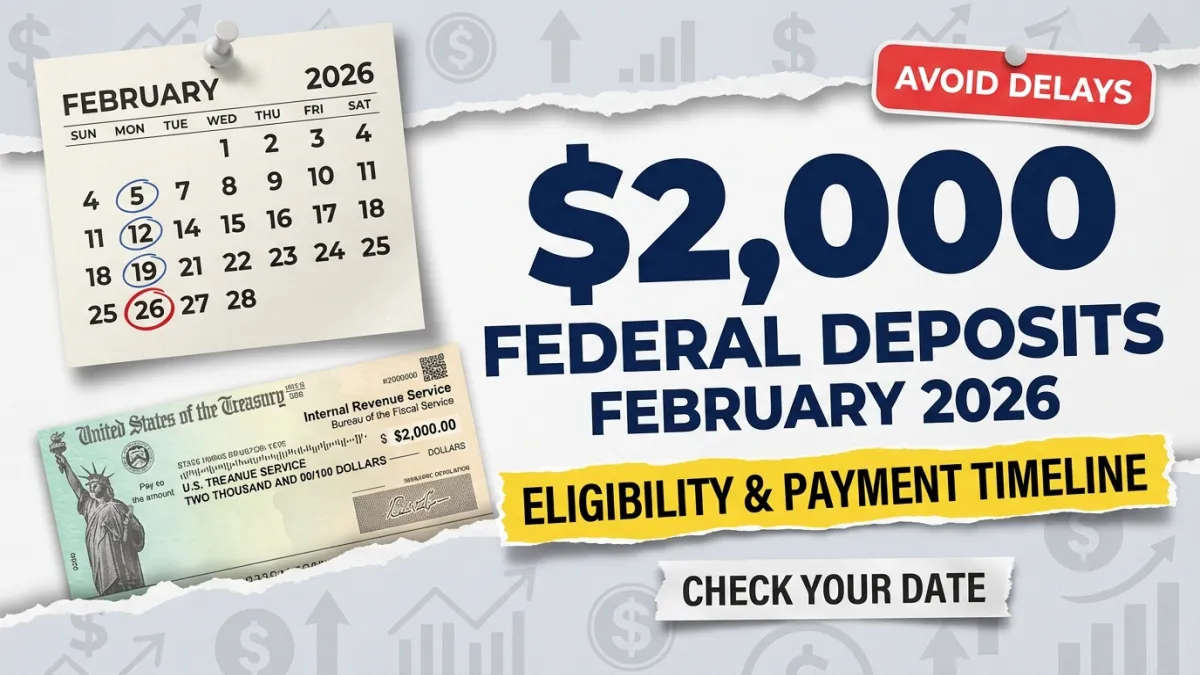
$2,000 Federal Deposits February 2026: Talk about a possible $2,000 federal deposit in February 2026 has created strong interest among Social Security recipients, veterans, and low-to-moderate income households. With living costs still high, many people are paying close attention to any update about additional federal support. However, federal payments usually follow strict rules, and any new deposit would depend on official approval and eligibility guidelines.
Federal benefit payments are never random. They are processed through established systems that rely on income records, tax filings, and enrollment in existing benefit programs. Understanding how these systems work can help reduce confusion and prevent unnecessary stress.
How Eligibility May Be Determined
If a $2,000 federal deposit is approved, eligibility would likely be based on income information from recent tax returns. In previous relief programs, adjusted gross income limits were used to decide who qualified for the full payment and who received a reduced amount. Individuals with income above certain levels often saw payments phased out.

Participation in federal programs such as Social Security retirement, disability insurance, or veterans’ benefits may also be reviewed during eligibility checks. People who have not filed recent tax returns or whose income has changed significantly may experience additional review before payment approval.
Agencies Responsible for Payment Processing
The Social Security Administration and the Department of Veterans Affairs already manage regular monthly payments for millions of Americans. If a one-time federal deposit is introduced, these agencies would likely work alongside the Internal Revenue Service to verify records and distribute funds.
Social Security benefits follow a staggered schedule based on birth dates, while veterans’ payments usually follow a fixed monthly cycle. If a special deposit is issued, it would likely be rolled out in phases rather than all at once.

Payment Timeline and Delivery Methods
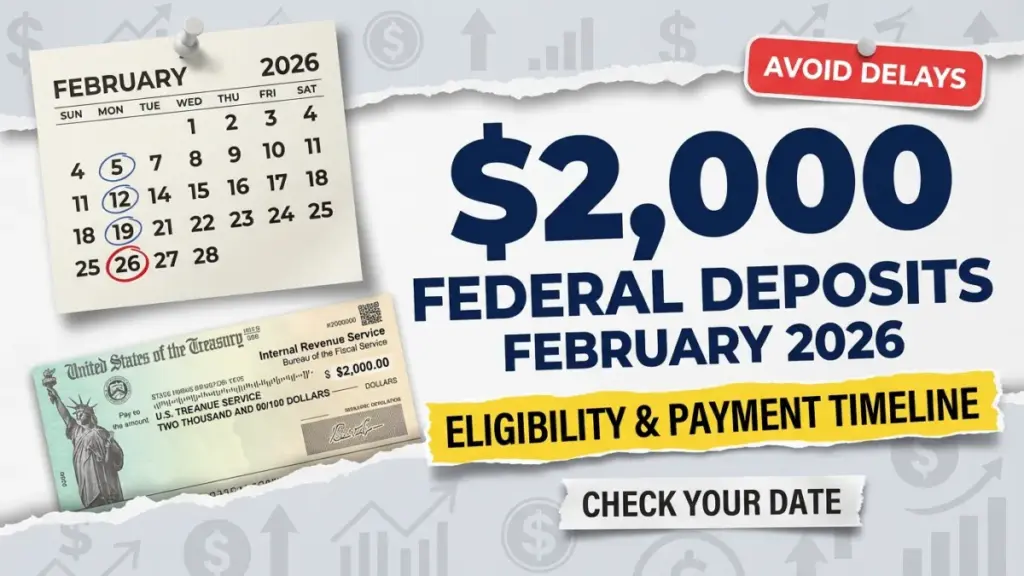
Federal payments are usually sent in batches to avoid system overload. If implemented, electronic transfers would likely begin first, possibly in early February, with additional waves through mid and late February. Paper checks or prepaid debit cards, if used, would take longer and may extend into March.
Direct deposit remains the fastest method. Beneficiaries using electronic banking generally receive funds more quickly than those waiting for mailed payments.
Avoiding Delays and Fraud
Most payment delays happen due to incorrect banking details, outdated mailing addresses, or identity verification reviews. Updating personal information in advance can reduce the risk of interruption. Beneficiaries should also be cautious of scams. Government agencies do not charge fees to release payments and do not request sensitive information through unsolicited calls or messages.

Staying informed through official government websites is the safest way to track updates. Verification through secure portals helps protect personal data and prevents fraud.
Disclaimer: This article is for informational purposes only and does not confirm the approval of any specific federal payment. Eligibility, timing, and payment amounts depend on official government announcements and legislative action. Readers should rely on authorized federal sources for accurate and updated information.